All About Mini-Splits
What are Mini-Splits and How Do They Work?
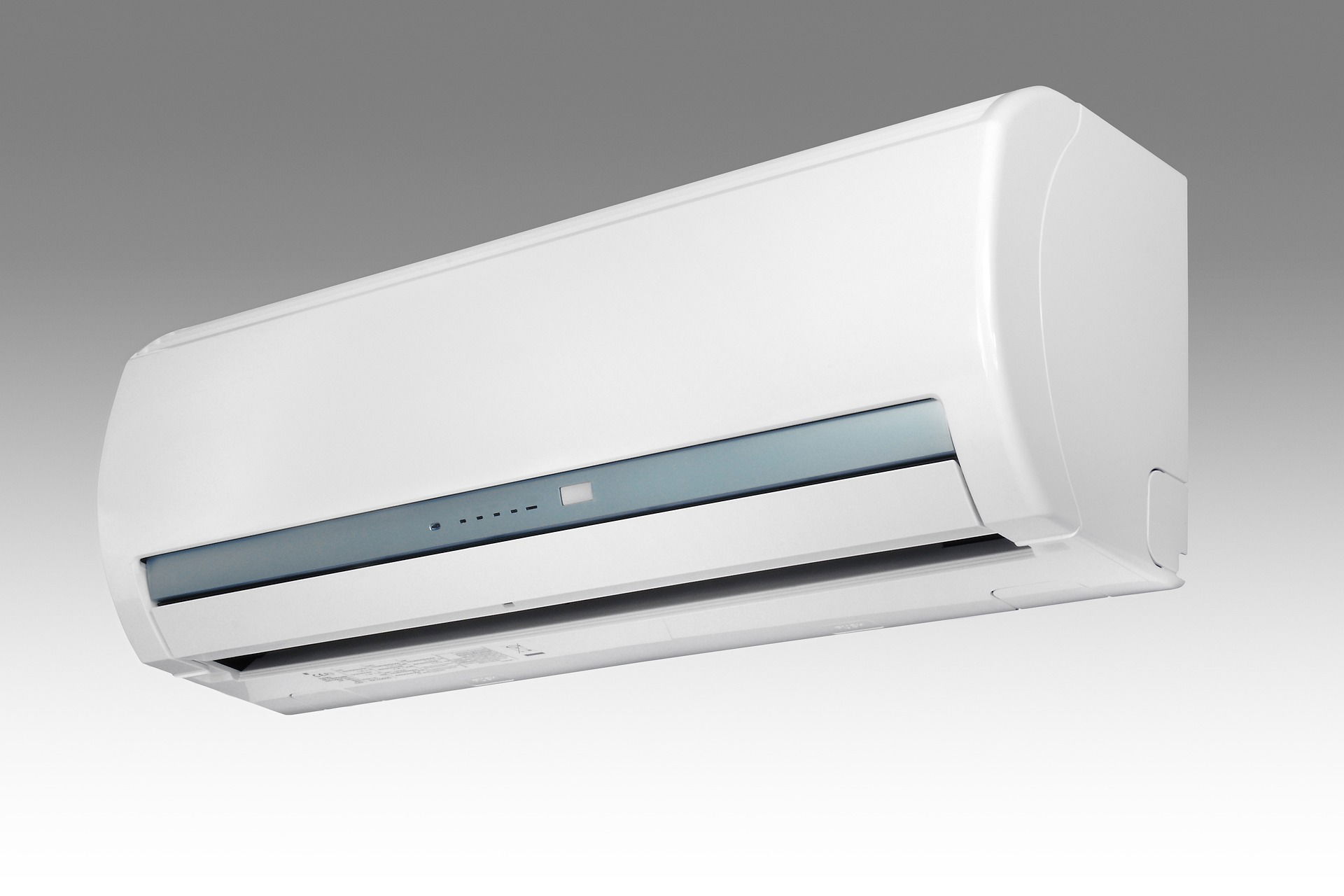
A Mini-Split system is a type of air conditioning system that provides individual and flexible solutions throughout your home. Working similarly to a regular central system, the outdoor unit contains a condensing coil, compressor, and fan that help circulate air through the units' indoor coils. Refrigerant gas then flows back out of the indoor units through the return ducts to the outside unit where it is cooled and recycled again.
One common misconception, however, is that they only offer cooling during the warmer months. In addition to cooling, Ductless Mini-Splits also provide heating during the cold weather season to help maintain a comfortable home or business year-round.
Can/Do Mini-Splits Heat?
Yes! Commonly known as Ductless Mini-Splits, they can heat rooms or areas in a home individually, which is great news if someone in the home is sensitive to temperature changes. They are more energy-efficient than other HVAC systems because they don't generate heat, instead moving it from one place to another by extracting heat from the outdoors, even when it's freezing out. Operating similarly to central air conditioners, a refrigerant is used to extract heat from indoors and expel it outdoors through the compressor. In order to heat an area, Ductless Mini-Splits operate in reverse during cold weather by using refrigerant to extract heat from the outdoor air. This captured heat is then transferred to the indoor air handling unit, which in turn disperses warm air into a specific area.
Are Mini-Splits Heat Pumps?
A Heat Pump moves heat from one area to another, and Mini-Splits are a type of Heat Pump, with one key distinction, they don't require ductwork. Instead, they consist of an outdoor condenser unit and one or more indoor air handling units installed on walls or ceilings. These indoor and outdoor components are connected by a conduit containing a power cable, refrigerant tubing, and a condensate drain.
Can Mini-Splits Heat, Even In Extreme Winter Weather?
Although efficiency may decrease as temperature drops, traditional mini-splits operate efficiently in temperatures as low as 32 degrees Fahrenheit, often requiring a backup heating source or dual-fuel system. New technology has made modern mini-splits highly efficient in temperatures below zero. Cold-Weather heat pumps can operate as low as minus 13 degrees Fahrenheit. Per Energy Star, newer mini-split models that meet Energy Star efficiency ratings function in extremely cold climates by utilizing advanced compressors and refrigerants. If you reside in a cold climate, consult a local HVAC contractor to explore what Energy Star model suites your specific needs.
What is an Energy Star Efficiency Rating?
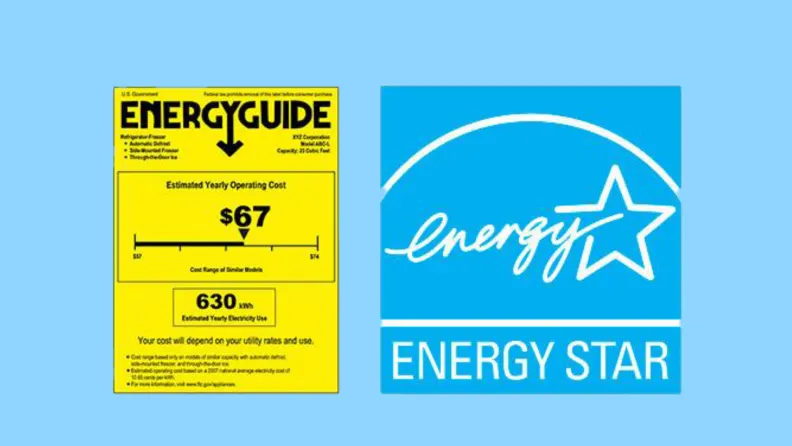
Energy Star is a rating system backed by the Environmental Protection Agency (EPA) that provides consumers with unbiased information about the energy efficiency of products. Anything with an Energy Star label uses less energy to get the same job done as their traditional counterparts. Products have to meet strict energy efficiency criteria set by the EPA or U.S. Department of Energy to earn the Energy Star. There is no single metric for energy efficiency (it depends on the kind of product you're comparing), and product efficiency is determined by a series of tests which are all third-party certified to ensure objectivity.
Will Mini-Splits Save Me Money and Increase My Home Value? Does it Come With a Warranty?
Yes, Yes, and YES!
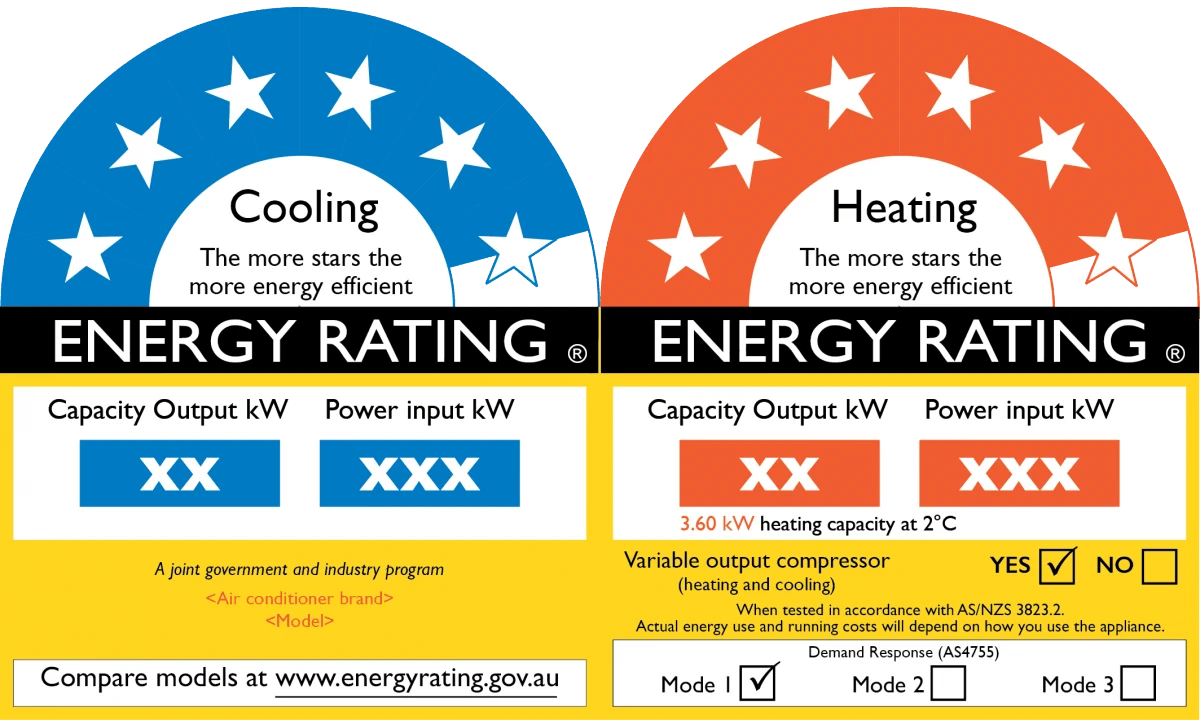
Average household energy bills are around $2,000 annually, and almost half of that goes towards your heating and cooling! Mini-Split heat pumps that earn the Energy Star label are independently certified to save energy, money, and protect the climate. Because mini-splits transfer rather than generate heat, Energy Star certified Mini-Splits use up to 60% less energy than a standard home electric radiator.
Mini-Splits that earn the Energy Star are eligible for a federal tax credit and many utilities offer incentives for installing Energy Star certified Ductless Mini-Split Heat Pumps. Learn more at:
www.energystar.gov/taxcredits and www.energystar.gov/rebatefinder
Home improvements can add value to your home and increase the chance of a higher asking price. Mini-Split installation is non-evasive, easy, provides an eco-friendly and cost-effective way to heat and cool the home, and often requires less maintenance and repairs.
Many brands come with a manufacturer warranty for parts, and HVAC contractors may give you a warranty for labor (depending on if you buy from them).
Mini-Splits VS....
CENTRAL AIR: Central Air transports air throughout the rooms in your house vis a series of ducts and fans, and there is a large outdoor unit that usually sits on a concrete slab near your home. You can usually hear the outdoor unit kicking up and noise can reverberate through your ducts, making it loud and noisy. Mini-splits also have an outdoor unit and instead of connecting to a series of ducts, the Mini-Splits lead to indoor wall-mounted units (evaporators) that disperse air. Due to the lack of ducts, they are referred to as "ductless" units. The outdoor unit for Mini-Splits isn't silent but can be placed further away from your house and its hoses don't carry sound as well as metal air ducts would, making this the quieter option.
According to Home Advisor, Americans spend on average between $3500 and $7500 installing central units as compared to $2000 and $14,500 on Mini-Split units. This range difference is due to the flexibility in terms of what can be purchased. A compressor and single evaporator doesn't cost much but as you being adding evaporators to create a custom solution, your cost will increase. Central Air will be capable of heating and cooling your home without the need for additional components, as long as you already have the ductwork installed. If you don't, a Mini-Split unit will be cheaper because it only requires 3-inch holes to pass cables through.
While a Central unit is basically invisible inside your home, Mini-Split units have evaporators that attach to your interior walls. If that is an issue, you may want to lean towards a Central unit.
Mini-Splits have the ability to set the temperature for each evaporator, meaning you could have one evaporator per room with each set to its occupant preference. This isn't possible with Central units, as you are limited to closing vents to rooms when the temperature isn't to your liking.
HEAT PUMPS: Heat Pumps and Mini-Splits are both systems that can heat and cool your home by moving air. Heat Pumps are environmentally friendly, require installation of just one unit, and uses ducts to distribute hot and cold air. Mini-Splits are unducted, can be installed anywhere in the room, offer increased efficiency, and can reduce heating and cooling costs by up to 60%.
Unlike Mini-Splits, you do not need to install and maintain several different units, making installation quick and smooth. However, if you are in an area where there is not much heat, this is likely not the right choice for you due to heat pumps functioning by moving heat from one area to another. If there is no heat, it's ineffective. They are ideal for moderate to warm climates with a temperature of 40 degrees Fahrenheit or more on a regular basis.
WINDOW UNITS: Both units are designed to cool the air in a specific room or area of your home, but they differ significantly when it comes to installation, cost, and cooling capacity.
Window units are self-contained appliances; all of the cooling elements are housed within the unit itself. Cooling capacity and energy efficiency vary significantly from model to model and can be determined by looking at the British Thermal Unit (BTU) number. This gives you an indication of the size and space the unit can effectively cool down. The higher the BTU, the more expensive it will be. The average cost for window units range from $150 to $500, making it the more affordable option, but keep in mind that window units are limited to the rooms they are located.
Installation of the unit can be done on your own. They are designed to fit inside your window, giving you more space in your home and less clutter on your wall. It also means that there will be a partial loss of a window, blocking out some sunlight and preventing you from opening the window for fresh air. It has to be correctly sized for the space that needs cooling; if the unit isn't strong enough, it won't properly cool down the area. Too big, you'll be overpaying on your electricity bill.
While a window unit can be installed and removed with relative ease, Ductless Mini-Split systems are a fixed solution. Evaporators are also more susceptible to damage since the refrigeration lines are not meant to be wrapped and unwrapped over and over again.
When deciding between a Window Unit and a Ductless Mini-Split, the best option depends on the space you need to cool and your available budget.
Duct vs. Ductless
Ducted Mini-Splits (technically known as a ceiling ducted unit) use ductwork to distribute air throughout the home, while Ductless Mini-Splits have individual units in each room or zone. There are a few different types of Ductless Mini-Splits but they are mainly wall-mounted, ceiling cassette, and floor mounted. Ductless is cheaper (Ducted is on average 20% more expensive) and more efficient while Ducted offers better interior aesthetics and quietness. The choice between them depends on your specific heating and cooling needs, budget, and aesthetic preference.
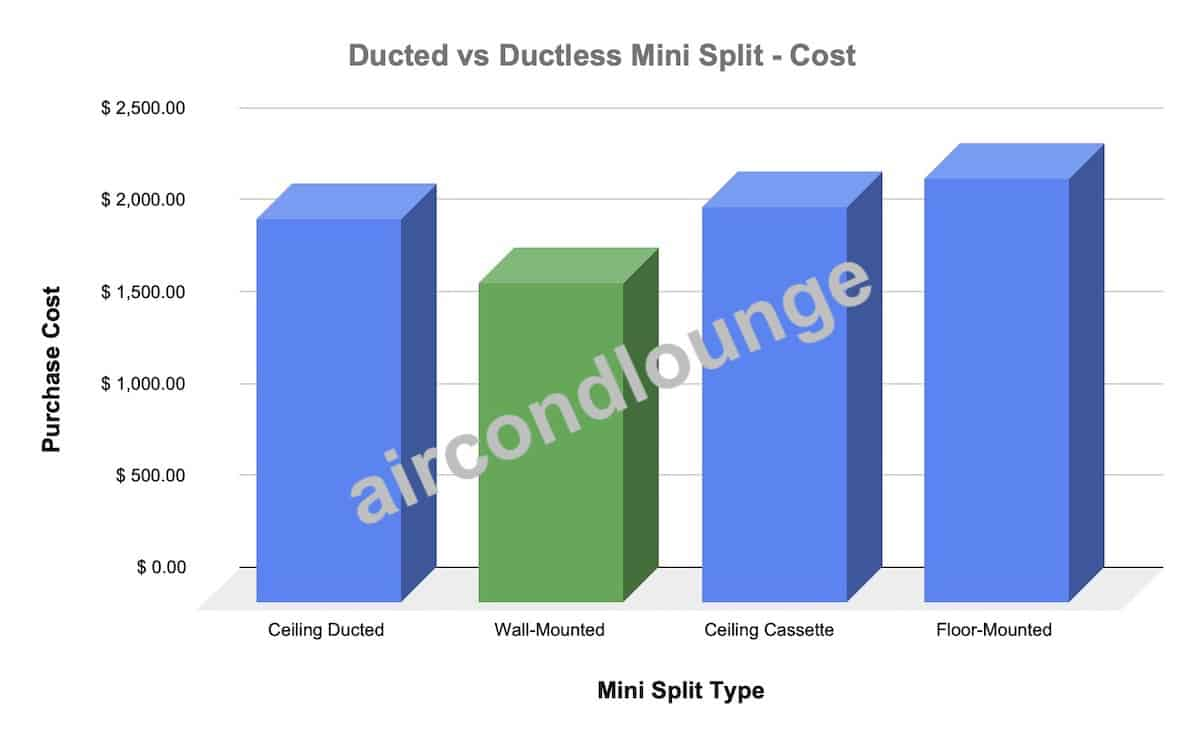
While it seems like Ductless is only slightly cheaper than Ducted, when you account for installation cost, the affordability of Ducted Mini-Splits drops drastically. On average, it costs around $3,000 to install ductwork, with most homeowners spending between $2,000 and $5,000. This brings the total upfront cost of a Ducted Mini-Split to a range of $4,000 to $7,000, excluding labor costs. Adding labor could increase the total up to $9,000. In comparison, installation of a Ductless Mini-Split only involves the labor cost. Assuming the cost of a single unit is $2,000, the total upfront cost could be around $4,000.
One thing to keep in mind is that if you have central air, you might be able to connect a new Ducted Mini-Split to your existing ductwork. That means it all boils down to purchase cost.
Regardless of type, Ductless Mini-Splits are more efficient than Ducted Mini-Splits. When cooling, they are 24% more efficient and 5% more efficient during heating.
Ducted Mini-Splits require more maintenance than Ductless Mini-Splits because of the addition of ductwork and difficulty to service and repair due to its location (Ducted may be in the attic while Ductless are installed above the ceiling).
Both Ducted and Ductless Mini-Splits have a similar lifespan as long as the maintenance work is carried out.
Can I DIY a Mini-Split? Do They Come Pre-Charged?
DIY Mini-Splits are ductless units used in your home or business and don't require a professional to install them and yes, the lines are pre-charged (they don't need vacuuming). These units have and indoor air-handling unit and an outdoor compressor, condensers, a conduit that stores power cables, suction tubing, and refrigerant cooling. The Condensate Drain links the indoor and outdoor units, giving you optimal heating and cooling in areas that are hard to reach.
DIY units are ideal for multi-family homes, retrofit add-ons, and room additions. Each zone has its own programmable thermostat. The price range averages between $1,200 and up to $2,500, not including any tools or materials you may need to buy.
These systems are great if you are handy and like a home project. However, if you don't follow all instructions accordingly, you will not get the desired results, likely resulting in having to call a professional. It is worth the time to do your research and decide if that is a task you can take on.
What Are Some Issues That Can Arise with Mini-Splits?
Ignoring the required maintenance could create future problems that end up costing you a lot of money. They need to be serviced regularly to maintain optimal performance. Here are some of the most typical problems and how you can troubleshoot them.
YOUR MINI-SPLIT IS DRIPPING WATER OR NOT DRAINING WATER
There might be a problem with your condensate drain or drain line. The drain line can get clogged with mold, which in turn forces water to back up and drip. Our team will be more than happy to assist you in getting that drain unclogged quickly.
MAKES CONSTANT NOISE
While a Mini-Split system doesn't typically create a lot of noise when it's on, there are times where they can make sounds that might alarm you. Popping and/or Clicking noises tend to be the plastic housing expanding or contracting while the system is running, and this should be expected. A Swoosh/Crackling/Gurgle noise can occur when your system goes into defrost mode. This is also expected and does this to keep itself from freezing over. However, if it's consistently switching over into this mode, it can be indicative of a few issues. You may be low on refrigerant, the circuit board might be flawed, or sensors can be malfunctioning. Our talented Seasonal Energy Service technicians can diagnose and fix the issue in a jiffy!
THE HEATING OR COOLING ISN'T WORKING
If your system is not heating and/or blowing hot air, your coil could be frozen over. This could be a result of low refrigerant, failing circuit boards, or malfunctioning sensors.
If you aren't feeling cold air blowing or your system just isn't cooling, you might have a refrigerant leak. Air Conditioning relies on refrigerant to shift heat out of your home, and leaks have to be fixed by a licensed HVAC professional. Our team is licensed and bonded, so call us at 509-424-3245 and get your home back to the comfort you deserve.
YOUR HOME IS HUMID
Mini-Splits are fantastic at making sure your home is dehumidified during the warm months. If you notice that it's humid inside, there could be a few reasons why. The size of Mini-Split you get is decided on and installed based on square footage and BTUs, and if it's too big it will cool down the area too quickly, leaving not enough time to dehumidify. There could also be a block in the condensate drain line. If the blockage isn't dealt with in a timely manner, it could result in bigger issues down the line including mold and strange smells.
YOU ARE SMELLING BAD/STRANGE ODORS
Smells that emanate from your Mini-Split means there is something wrong. You should always call your local HVAC professional to inspect, diagnose, and resolve these issues.
MOLD OR MILDEW: The growth of mold or mildew is dangerous to your health, especially if it's being spread through your home air system. If you smell a musty, sour, or mildew-like odor, you could have a problem with mold.
VINEGAR OR CHEMICAL: Smelling a sweet or vinegar odor can be the result of a refrigerant leak. As we touched on earlier, refrigerant can only be filled by a licensed HVAC professional. If there is a low concentration of chilled air that goes along with the odor, it's a definitive indicator of low refrigerant. Call us today for help in resolving the issue.
FISH: The smell of fish is very distinctive, and no one wants to have their home or office smelling like that. While there are a few reasons this could happen, the main concern is there is an electrical issue or leak in your Mini-Split. If you are experiencing this problem, contact your local HVAC professional.
YOUR SYSTEM WON'T TURN ON
One of the most common issues our customers have is their Mini-Split not turning on. Luckily, the resolution tends to be the simplest answer! Check the batteries in your remote first. When the batteries are no good, your unit will not turn on. Replacing them with fresh batteries will usually fix the issue. If you're still experiencing problems after this, reach out to us at 509-424-3245.
What are the Best and Worst Mini-Splits Systems Available?
Deciding on a Mini-Split System that is right for you can be overwhelming. We took the time to discuss 3 systems we love the most and 3 systems we would steer clear from. Please keep in mind, these picks are based on our personal experiences working with them. The goal is to make sure you have both sides of the story when deciding on your purchase. We always recommend doing research, asking questions, and comparing multiple systems to guarantee you make the most informed decision that works best for you. Our team believes in honesty and transparency, so we are more than happy to discuss all options and answer any questions or concerns you may have. Call us at 509-424-3245 for a Free Estimate that will include multiple options to fit your budget and comfort needs.
OUR PICKS FOR TOP 3 BEST MINI-SPLITS:
MITSUBISHI: Mitsubishi is a pioneer in ductless heating and cooling, known globally for their industry leading innovation, quality, and reliability. Their systems are customizable, making them well suited for additions, garage conversions, cabins, and small office suites. Mitsubishi offers many different models that meet ENERGY STAR guidelines. While they may not be the best option for every situation, their product range makes them a strong contender in the HVAC market.
PROS:
- Customizable HVAC systems with targeted heating and cooling
- Reduced energy loss, less invasive, and more affordable installation compared to ducted systems
- Quieter outdoor units compared with ducted split system heat pumps
CONS:
- Larger areas may require multiple systems, increasing installation costs
- Indoor units are louder in the room compared to central ducted systems
- Heat pumps are less efficient in freezing weather, requiring Hyper Heat technology in cold climates
DAIKIN: Daikin has long been one of the world's top A/C and Furnace brands, with their Mini-Splits being the top of the line. The company is credited with inventing inverter compressor technology and owns various other A/C companies including Amana and Goodman. Similar to other top brands, the price of a Daikin Mini-Split will reflect its value. They offer the widest range of inventory and options for a Mini-Split regardless of how many zones or how large of a unit you need. Daikin also produces the smallest indoor unit available, measuring in at 16" x 16" x 8".
PROS:
- Offers a Very Wide Range of Products
- Very High Efficiency: SEER Ratings range between 20 and 30
- Warranties of up to 12 Years
CONS:
- High Cost
- Doesn't Do Well in Extreme Cold Weather Climates
FUJITSU: Fujitsu is sought for its high efficiency in heating and cooling capabilities. This makes them a top contender in all environments to provide year-round comfort. Their technology creates the ability to reduce energy consumption, giving homeowners the capability to save money.
PROS:
- Fujitsu has a 5-10 year warranty covering all of its Minisplit ACs. Warranties include labor
- Easy to install and takes up minimal space, helping to save on installation costs
- Features include technology such as Extra Low-Temperature Heating that can keep your home warm even with outside temperatures of -15oF
OUR PICKS FOR TOP 3 WORST MINI-SPLITS:
MR COOL: Mr Cool Mini Splits are well known in the DIY world for their installation options. A wide variety of systems are available for an affordable price. Homeowners have the ability to install these units themselves, saving money upfront.
PROS:
- Anyone can install with the use of simple hand tools
- Compact and quiet
- Inverter compressor is extremely efficient with high SEER ratings
CONS:
- Flared fittings are not as reliable as soldered connections
- Relatively new company, long-term part availability can become problematic
- Some HVAC companies refuse to work on or install, due to DIY
PIONEER: Founded in 1995, Pioneer Mini-Splits are available in 3 categories: Ducted, Ductless, and Multi-Zone Systems. Mounting is offered in 2 variations, Ceiling Concealed and Central Split. These Mini-Splits are considered good alternatives for providing high-performance heating and cooling compared to traditional AC systems.
PROS:
- Features environmentally friendly and energy efficient AC systems, using R-410A refrigerant (helps to decrease UV radiation levels at Earth surface)
- Equipped with a front desk and wire control feature allowing ACs to be turned on/off even at longer distance
- Refrigerant leakage detector that automatically stops when leaks are discovered. This helps to protect the units compressor from damage
CONS:
- Limited Warranty doesn't include any costs for diagnosis, repair, removal, installation, replacements, or cost of materials and supplies used
- Must be installed by a licensed or professional technician due to complexity of the install procedure. Improper installation can cause damage to the system
- Cost of systems are higher compared to other AC brands
CARRIER: Carrier has been around for over a century, meaning they are constantly adapting to changing times. Their products are known to be some of the most efficient and environmentally friendly in the industry.
PROS:
- High SEER ratings
- Features include humidity sensors, occupancy sensors, Wi-Fi
- Multiple mounting options with different models
CONS:
- Tends to be more expensive, ranging from $7,500-$12,500 (w/installation)
- Most economy models aren't ENERGY STAR certified
Pros and Cons of Mini-Splits
Mini-Split Systems are quickly growing in popularity. They are dual-purpose for heating and cooling, highly efficient, quiet, and take up less space in your home or office. While these are all great reasons to consider when deciding to purchase one, there are also several disadvantages to keep in mind.
PROS:
- Ductwork Isn't Necessary. The system will function similar to a hotel unit and its compact design is a great choice for small spaces and remodels.
- Zoning. This gives you greater control over the system allowing you to change the temperature in different spaces to your individual comfort levels. This keeps the unit from overworking when trying to heat or cool hard to reach areas.
- Suitable for Room Additions and Conversions.
- High Efficiency. Mini-Splits are on average 30% more efficient than conventional central air systems. Temperature fluctuations are regulated through inverter technology which allows them to modulate output instead of constantly turning on and off, resulting in less energy consumption and increase savings on your utility bill.
- Heating and Cooling comes from the same complete unit.
- Simple Installation. It can be a great DIY that could save you money, but you should also factor in experience. DIY installation might not be for everyone, and the help of a licensed professional is recommended.
- Low Noise. Noise is relegated to the outside condensing unit, and even then, they are significantly less noisy than traditional units. When eliminating ductwork, you also eliminate a source of noise. Many of today's ductless air handlers have variable speed fans that operate quietly on low speeds.
CONS:
- Aesthetically Unappealing. Traditional units are hidden from view, usually in a basement, attic, or garage. Mini-Splits have to be mounted in an open, unobstructed view in the room it's meant to heat or cool.
- High Installation Costs. Cheaper brands can save you money in the beginning, but they aren't as reliable as their more costly counterparts. This can lead to more problems and early breakdown. An average unit can cost between $5,000 and $7,000 per system. If you are needing multiple systems, you could easily pay upwards of $30,000, making it much more costly than installing a traditional unit with accompanying ductwork.
- Difficult to Know What Size You Need. A qualified professional will need to come to your home to calculate the heat pump size that you need. If your system is too big, it will cool the room too quickly causing it to turn off prematurely and humidity will remain in the room. If it's too small, it will run longer and more often than it should. This will result in a larger utility bill and won't save you money as intended.
- Savings Might Not Be What You Thought. Mini-Splits operate entirely on electricity and are proven to be up to 30% more efficient than traditional systems, but the overall cost efficiency is often subject to debate. Weighing the difference in cost between the unit efficiency vs how long it runs, including the installation cost, will determine how long it takes to pay for your system in terms of efficiency.
- Not Meant for Whole House. Mini-Splits are ideal for large, open areas like a garage, shop, individual room, or basement. When trying to heat or cool multiple rooms with a single unit, the overall operating cost will raise, and you will see a drop in efficiency.
- Maintenance and Repairs Can be Costly. Maintenance will cost just as much as a traditional system will. Scheduling maintenance every spring and fall keeps your unit running efficiently, extending the life expectancy (usually 10-30 years, depending on the brand and how well you maintain them). Visits could cost between $150 and $300 with an additional cost for any repairs made. Most reliable HVAC companies will offer a maintenance program that could save you time and money.